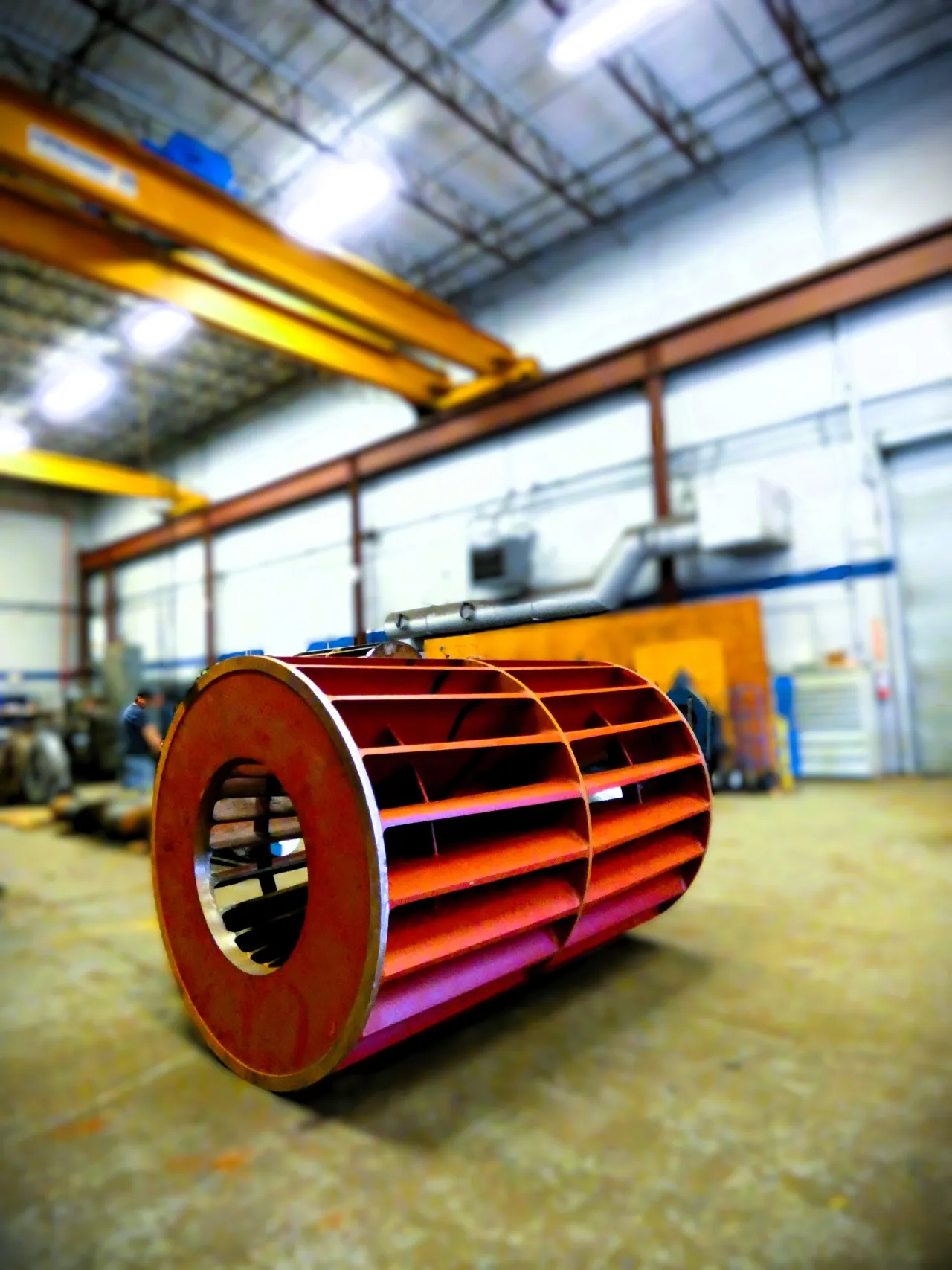
Condition of the Casing, Rotor and Cone
This is the first and largest factor, and you cannot judge it from the outside. Loss of vacuum, high amps and vibration all point to internal wear, but they do not tell you whether that wear is in the cone clearance or in the casing wall.
| Component | Rebuildable When | Not Rebuildable When |
|---|
| Casing / Body |
Wall thickness within limits, ports and flanges intact or weld-repairable, no cracks through pressure boundary. |
Cracked through the wall, wall thinned below safe limits, or warped beyond machining. |
| Rotor |
Blades worn or pitted but hub and shaft fit are sound; can be trued, built up or clad. |
Blades cracked at the root, hub cracked, or shaft fit wallowed beyond sleeve repair. |
| Cone / Head |
Surface worn, scored or pitted; can be machined and clad in 304L or 316L. |
Cracked or worn so deep that machining would take it below minimum section. |
| Shaft |
Journal or seal area worn; can be sleeved or replaced. |
Bent beyond straightening or cracked. |
A shop with a big enough boring mill and in-house cladding can save cones and casings that a smaller shop would call scrap. Ask what the shop can actually repair before accepting "not rebuildable."