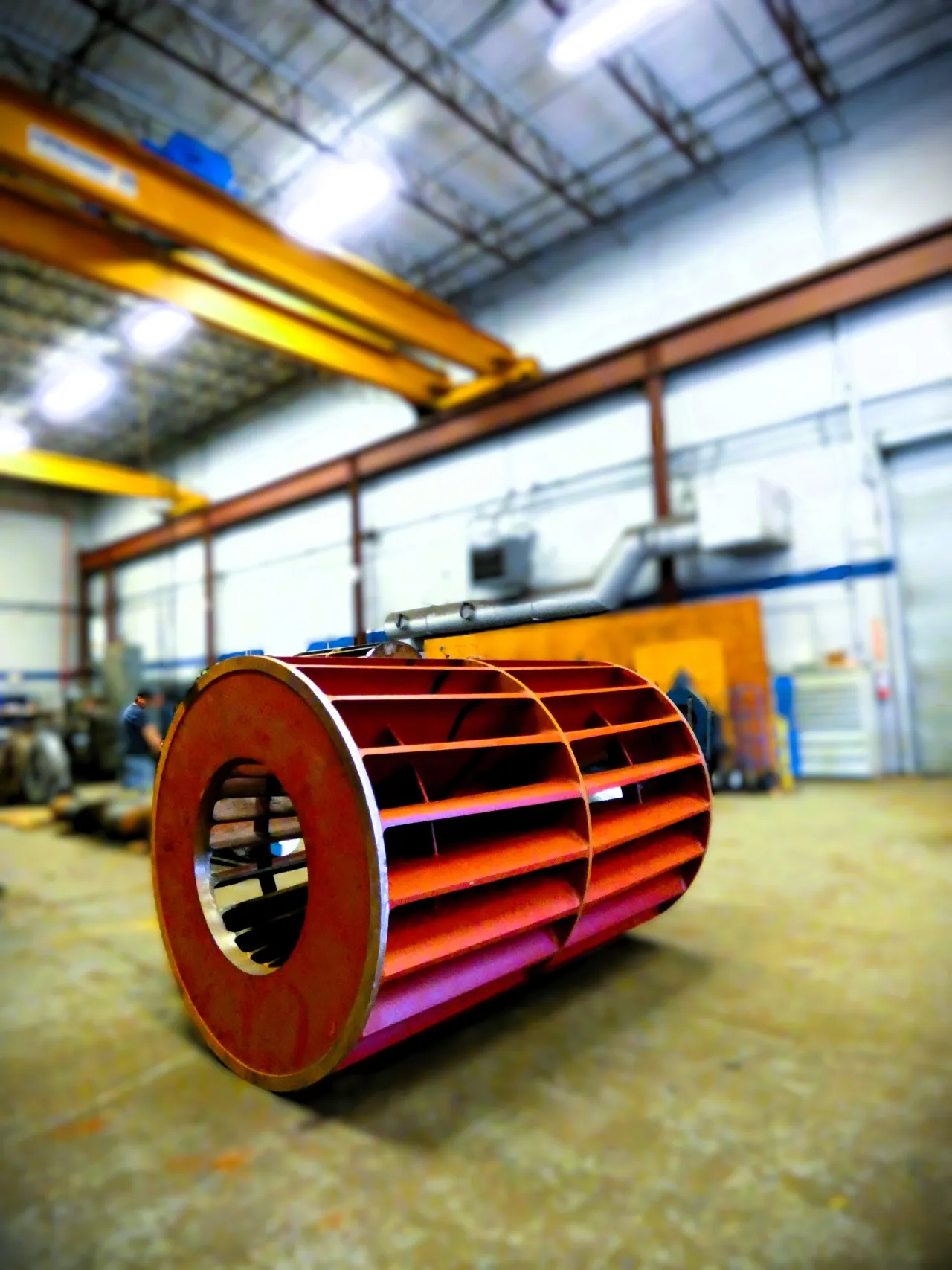
What fails on a Nash liquid ring vacuum pump
A Nash liquid ring pump has one moving part. That simplicity is why the pumps run for decades, and it is also why a small change in clearance or seal water quality shows up quickly as lost capacity. Most of the pumps that come through our shop fail for one of the reasons below.
|
Symptom at the plant |
Likely cause inside the pump |
|---|---|
|
Vacuum level drops, capacity falls, motor amps normal or low |
Rotor-to-cone (or rotor-to-port-plate) clearance has opened up from wear or scale; internal recirculation |
|
Vibration, noise, rising bearing temperature |
Bearing failure, shaft wear or scoring at the bearing and seal journals, rotor imbalance from erosion or scale |
|
Water leaking at the ends of the pump |
Packing or mechanical seal worn; shaft sleeve grooved; seal water pressure or flow out of spec |
|
Sudden loss of vacuum with a rattling or gravel sound |
Cavitation from running too deep a vacuum for the seal water temperature, or from seal water starvation |
|
Pump seizes or turns hard by hand |
Scale build-up between rotor and cone, corrosion binding the rotor, or bearing collapse |
|
Motor overloaded, amps high |
Rotor rubbing the cone or body, excessive seal water, scale on rotor blades, or a partial flood at start-up |
Cone and rotor clearance wear. The cone (or port plate on flat-sided designs) sets the running clearance that controls how much air leaks back from discharge to inlet. Every thousandth that clearance opens up costs capacity. Wear comes from abrasive solids in the seal water, from scale that lets go and scores the surfaces, and from rubs during a hard start. Resetting this clearance is the heart of a Nash rebuild, and it cannot be done well without machining.